
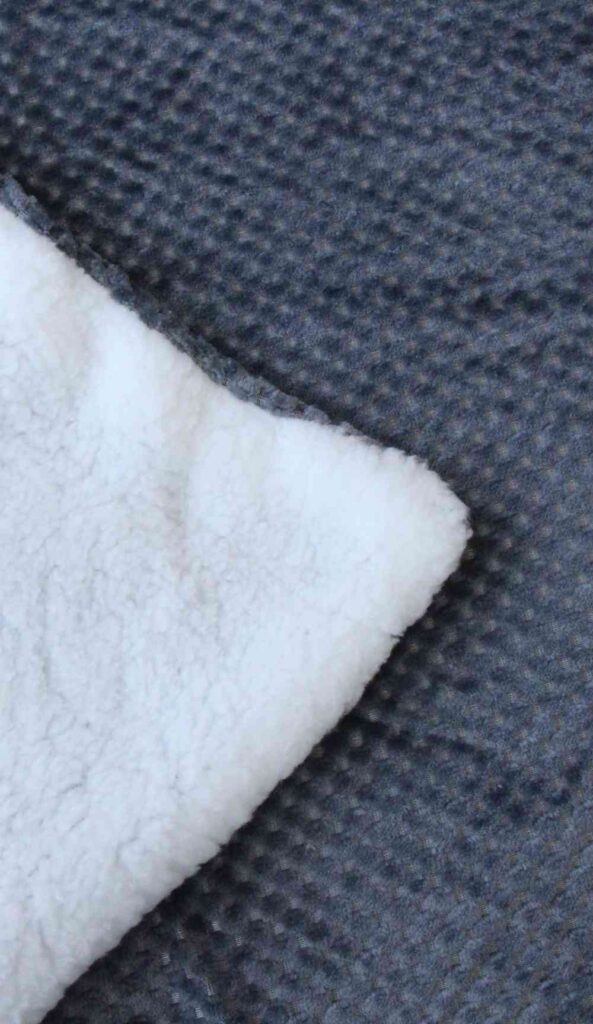
For the flannel listing, confirm the actual offered physical format before requesting fabric-edge descriptions. Only a confirmed fabric offer makes this edge-type enquiry applicable. Then ask which boundaries the supplier identifies and what literal edge descriptions it declares. A finished bed scene does not establish fabric stock, a roll, a selvedge or a particular treatment.
This distinction matters when purchasing receives a fabric-labelled catalogue reference whose display also resembles a finished home-textile item. The buyer should not begin with a presumed material edge and then work backwards to an assumed format. The useful sequence is a supplier-confirmed item identity followed by an attributable description of the applicable boundaries.
Identify the actual offered item
Use Zming Textile’s flannel fabric-labelled catalogue reference to introduce the enquiry. Ask which physical format, version and quotation line the supplier actually offers. Keep a finished-item response identifiable as such rather than relabeling it as fabric because that is the buyer’s preferred purchase format.
If the format remains unconfirmed, keep the fabric-edge question conditional. If a finished item is expressly offered instead, mark the fabric-only record not applicable to that offer. That is different from a supplier statement that a confirmed fabric boundary has a particular type or no declared treatment.
Ask for the supplier’s literal edge description
For a confirmed fabric offer, request the actual edge-type wording and the named boundaries to which it applies. Preserve the supplier’s terminology. Do not assign a selvedge, cut edge, finished border or another type from the appearance of the catalogue scene.
A supplier may describe one boundary while leaving another undeclared. Retain that partial scope rather than extending the answer around the whole item. A statement about a named edge should remain attached to its reference, without an assumption that opposite or other boundaries share the same form.
Connect the edge to an applicable marked reference
Ask whether an existing supplier drawing, image or other reference identifies the boundaries covered by its declaration. Record the document identity and revision if provided, along with the response linking it to the offered fabric. A general product image can identify the enquiry without defining those boundaries.
For example, the supplier might confirm a fabric format while an accompanying image still shows a finished-looking bed display. Request the supplier’s applicable boundary reference rather than choosing a visible border in that scene as the fabric edge. Keep any mismatch between the offer description and reference scope explicit.
Separate type from width inclusion
A usable-width record defines which dimensional boundaries a supplier statement includes. It does not establish the physical edge type. Conversely, a declared edge description does not supply usable or overall width values. Keep the records connected by exact item identity while preserving their different questions.
Do not infer a dimensional exclusion, treatment allowance or processing yield from an edge name. The present enquiry supplies no values or measurement convention. It records what the supplier calls the boundary on the actual fabric offer, without creating a manufacturing or handling specification.
Use a conditional fabric-edge record
Record field | Supplier information to request | Open status if absent
Offer identity | Exact item version and quotation reference | Applicable item unresolved
Physical format | Supplier-confirmed fabric format or another stated offer | No assumed fabric stock
Applicability | Fabric-edge enquiry applicable or not applicable | Format question remains open
Literal edge type | Supplier wording for each named boundary | Type not declared
Boundary reference | Applicable marked document and revision | Coverage not explained
Related limitation | Unstated treatment or dimensional relationship | No buyer-added process
Buyer disposition | Configuration description supported and remaining questions | No handling or yield approval
The blank record proposes no edge treatment, material, dimension or process. It can retain a confirmed fabric format while leaving all boundary types open. It can also record one supplier-described edge without completing the others. Keeping those outcomes distinct prevents an incomplete answer from becoming a whole-item specification.
Keep other fabric records separate
A pattern-repeat reference concerns the design, while a face-side map identifies another aspect of the offered material. A roll-core enquiry applies only to an expressly confirmed roll format. None establishes an edge type automatically. Link the records by exact version without borrowing information from one scope to fill another.
Likewise, an edge-detail request for the different finished-quilt product should remain separate. It concerns another physical item and may use different boundary terms. A similar catalogue appearance does not establish that its finishing description applies to the fabric-labelled offer.
Do not turn the declaration into a procedure
This enquiry provides no cutting, hemming, sewing, unwinding, handling, inspection, testing or repair instructions. It does not ask the buyer to determine the edge type through an assumed physical method. The purchasing action is to request the supplier’s applicable description and retain its limitations.
A named edge also does not establish fray resistance, processing yield, composition, safety or performance. Catalogue words about thickness, warmth or care do not answer the boundary question independently. Keep those original material and product limitations intact rather than expanding the response into a broader guarantee.
Preserve changes by format and version
If a later quotation changes the physical format, ask whether the earlier edge statement remains applicable. A declaration about fabric should not carry over automatically to a finished-item offer. Keep the original response and identify any replacement description or resulting not-applicable status.
The internal handover can then name the actual item, applicable boundaries and exact supplier wording. Another reviewer should be able to distinguish a declared edge type from an interpretation of the bed scene. Missing fields remain targeted supplier questions, without an assumed custom treatment or production service.
Frequently asked questions
Does a fabric-labelled catalogue page establish fabric supply?
No. Ask the supplier to confirm the actual physical format of the offer. Keep the fabric-edge enquiry conditional until that point is resolved, rather than choosing a format from the title or presentation.
Can a visible border in a bed display be called a selvedge?
No. Request the supplier’s applicable boundary description and marked reference. A finished-looking scene does not establish a fabric edge or a particular treatment, and the buyer should not assign one from appearance.
Does an edge description define usable width?
Not automatically. Edge type and dimensional inclusion are different records. Retain each statement under its actual scope without deriving widths, exclusions, allowances or processing yield from an edge name.
What should purchasing approve after clarification?
Approve only the documented edge description and its applicability to the confirmed fabric offer, with gaps named. Keep manufacturing, handling, material and performance conclusions separate. No production or inspection guidance is provided.
Use the official catalogue page to identify the original flannel enquiry:
https://zmingtextile.com/product/stylish-double-layer-flannel-fabric-extra-thick-home-textile-material-with-diverse-patterns/
Send the actual-format and boundary questions through the supplier contact page:
https://zmingtextile.com/contact/
Further catalogue-related buyer articles are available here:
https://zmingtextile.com/blog/