
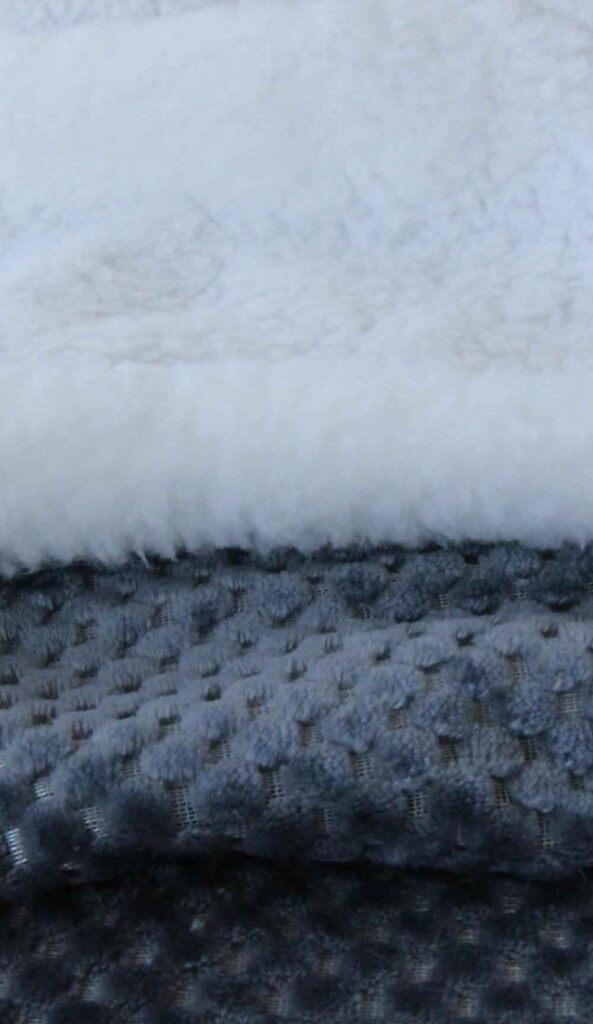
First ask the supplier to identify the exact physical format offered under the flannel reference. Then request a marked reference naming its intended face and back sides, plus any expressly stated orientation cue. Keep unmarked or ambiguous sides unresolved. A styled product photograph does not establish a fabric roll, a finished blanket, a nap direction or a cutting rule.
Resolve the offered format before naming its sides
A catalogue description and a styled display can leave a buyer uncertain about the goods being offered. The historical Zming flannel reference retains that fabric-versus-finished-display ambiguity. This article does not settle it by choosing whichever description seems convenient for the enquiry.
Ask the supplier what exact physical format its offer covers and retain the applicable version reference. The answer should identify the goods under discussion before the buyer uses face, back or orientation wording. Without that starting point, two people may appear to agree about a side while referring to different product forms.
This is a documentary identification task. It does not provide a laying, cutting, handling, manufacturing or testing procedure. Nor does it infer construction from the title, such as identical faces, a particular layer arrangement or a pile structure. The supplier’s expressly applicable description must establish the subject of the map.
Ask for a supplier-marked reference
Request a marked photograph or drawing that the supplier identifies as applicable to the offered item and revision. Ask it to name the relevant sides and explain any reference marks it uses. A buyer can locate a question on an image without turning that annotation into the supplier’s approved designation.
Keep the supplier’s exact terms alongside a short buyer cross-reference. If the supplier uses labels other than face and back, preserve those labels and ask how they relate to the offer. Do not force them into an assumed construction or a universal textile convention.
Where an orientation cue is expressly stated, record its source and scope. Do not infer a cue from a photographed pattern or convert it into a nap, cutting or laying direction. The purpose is to understand the supplier’s designation, not to create a physical process instruction from visual impressions.
A side-reference request table
Record field | Supplier information to request | Unsupported inference to avoid
Offer identity | Exact physical format, item version and offer reference | The styled image proves fabric or finished-goods supply
Marked reference | Applicable photograph or drawing revision | A buyer annotation is supplier approval
Side designations | Supplier names for the relevant faces or sides | Both sides are identical or interchangeable
Reference locations | Marks connecting the names to the offered item | Unmarked areas can be classified by appearance
Orientation wording | Any expressly applicable supplier cue | A pattern proves nap or cutting direction
Document scope | Versions or supplied items covered and excluded | The same map covers related products
Open questions | Ambiguous or unmarked relationships | An unanswered side is confirmed
Keep side identity separate from other design records
A pattern-repeat record concerns the supplier’s stated design geometry. A shade-reference record identifies a colour reference. A face-side map identifies which supplier designation applies to a particular side of the offered item. These records can be linked, but an answer to one does not automatically close the others.
For example, identifying a side does not establish a pattern pitch, a colour match or a fabric mass. Likewise, a design photograph does not explain whether both sides share a property or construction. Keep those unsupported relationships out of the approval note rather than letting a familiar image answer several unrelated questions.
The historical product image remains a related reference, not proof of composition, thickness, warmth, care requirements or performance. Props and display arrangements should not become supplied-goods assumptions. The original source ambiguity remains until the supplier expressly addresses the offered format.
Handle unanswered or changing designations
If the supplier marks one side but leaves another unclear, record that partial scope. Do not label the whole map complete because one question has been answered. The next buyer should be able to identify the remaining ambiguity without revisiting an undocumented interpretation.
When a revised offer or reference image appears, ask whether the earlier side designations remain applicable. Keep the earlier document tied to its original version. Replacing the offer heading while retaining old labels can make an old answer appear to govern different goods.
If two supplier references conflict, retain both and ask which relationship governs. Do not combine the preferred label from one image with the preferred orientation note from another. A buyer-composed hybrid may look clear while having no single applicable supplier authority.
Approve the documentary relationship narrowly
A useful approval note identifies the offered physical format, supplier side names, marked reference revision and any exclusions. It should state what was actually clarified. Avoid a broad product-approved or construction-approved flag for a decision that only links a supplier designation to an image.
The map does not establish how the goods should be cut, laid, handled or tested. It also does not confirm material, layer structure, softness, warmth or suitability for a particular use. No such technical or process conclusion is made here.
If the supplier does not provide an applicable map, keep the exact question open. That is more useful than completing a record with an assumed front or back. A clearly identified missing reference gives a colleague a precise follow-up instead of an apparent approval whose basis cannot be explained.
Frequently asked questions
Does the catalogue word fabric settle the offered physical format?
Not for this enquiry. The historical description and styled display leave a retained ambiguity. Ask the supplier what exact goods the offer covers before using side designations or assuming a roll or finished item.
Can a visible pattern establish the nap or cutting direction?
No. It can locate a question, but this record does not infer nap, pile, laying or cutting rules. Retain only expressly applicable supplier designations and leave unconfirmed orientation information open.
Does identifying one face prove that the other is identical?
No. Ask the supplier to identify the relevant sides and scope. A side label does not establish matching appearance, construction, properties or interchangeability across the item.
What should remain when the map is incomplete?
Keep the confirmed reference and the exact unanswered relationship. Do not fill an unmarked side from appearance or label a partial answer complete. Preserve the source version so a later reply can be linked clearly.
Identify the historical product reference in the enquiry: https://zmingtextile.com/product/stylish-double-layer-flannel-fabric-extra-thick-home-textile-material-with-diverse-patterns/
Request the applicable supplier map through https://zmingtextile.com/contact/ and consult https://zmingtextile.com/blog/ for related buying-reference topics.