
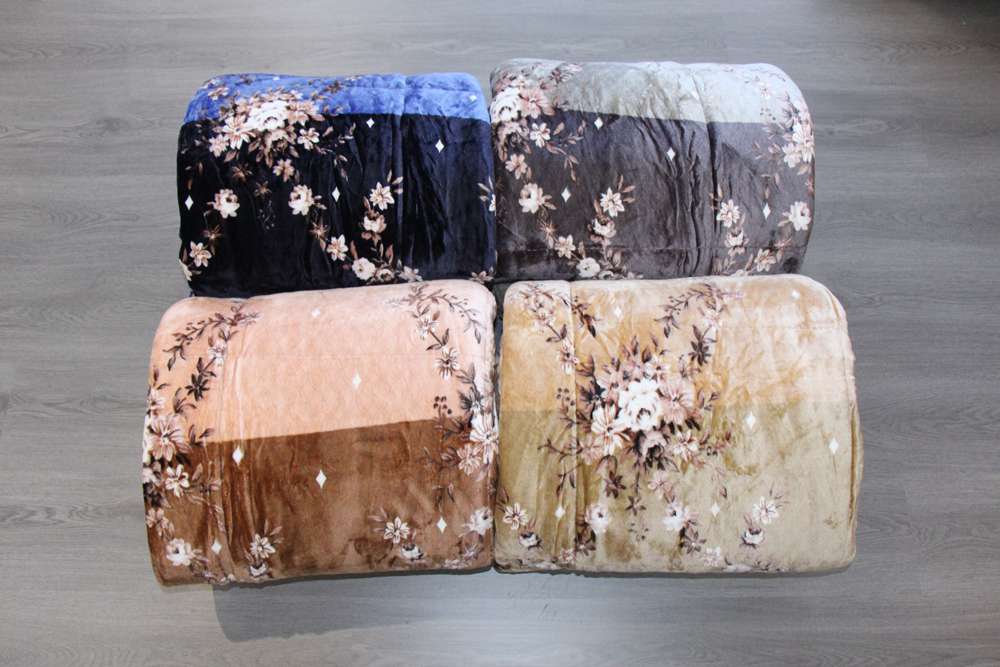
For a quilt RFQ, request an attributable list of the textile pieces actually included in the quoted selling unit and any explicit exclusions the supplier provides. Keep each named piece and count tied to the actual offer, leaving unprovided contents open. A catalogue scene does not establish a bedding set, matching accessories or delivered quantities; it also does not prove that an unconfirmed scene item is excluded.
The buyer needs a clear product-contents record before describing the commercial offer. It should distinguish supplier-declared textile pieces from packaging and unconfirmed presentation items. The useful conclusion is what the quotation actually covers, not how many objects appear in a styled image.
Confirm the actual physical offer
The historical double-sided-flannel-quilt entry identifies the product enquiry. Its descriptive name does not independently settle every physical piece included in a later quotation or verify material, filling, weight, warmth and care performance. Ask which actual item and selling unit the supplier is offering.
Keep that identity beside the selected catalogue reference and quotation line. If a response describes another physical format or an assortment, ask which proposal it covers. Do not default to a particular quilt count or a bundle merely because the title and display suggest a home-textile scene.
For example, a buyer preparing a home-textile comparison may receive a styled product photograph and a short price description. Those references can identify the enquiry while leaving product-piece contents unanswered. The next request should ask for the actual quoted contents rather than counting scene objects into the selling unit.
Separate confirmed contents from unconfirmed scene items
Ask the supplier to name each textile piece it actually includes and preserve its own identifiers. Record counts only when supplied and linked to that selling unit. An unnamed item or missing count remains unresolved rather than being completed from the picture.
Capture any explicit exclusions with the same attribution. Do not treat silence as exclusion, and do not treat appearance as inclusion. A scene item can remain unconfirmed in the enquiry without becoming a claim that it is or is not supplied.
If the supplier provides a marked contents reference, record which offer it represents. A visual annotation may help connect names to items, but the supplier should establish the commercial relationship. A product photograph alone remains presentation evidence rather than a delivery or quotation-contents record.
Use a quoted-contents record
Record field | Supplier information to capture | Boundary to preserve
Offer identity | Actual quilt or item version and selling-unit reference | Other proposals remain separate
Included pieces | Literal supplier textile-piece identifiers, if provided | No bedding bundle inferred from display
Counts | Actual stated quantity attached to each named scope | Missing does not mean zero
Exclusions | Explicit supplier exclusions and unconfirmed scene items | Silence does not establish exclusion
Applicable reference | Actual offer or contents-document revision | Packaging remains a separate layer
Buyer disposition | Accepted contents and unresolved questions | No fit, material or delivery approval
Keep the piece identity, count and offer relationship together when entering the reply in a buying sheet. A clear quantity without a named scope can remain ambiguous. A matching product name also does not fill an unanswered contents field.
Distinguish “contents list not provided” from “item not included.” The first describes an evidence gap; the second needs an actual supplier statement. Preserving the distinction prevents a short assortment summary from creating a supply promise or exclusion that was never declared.
Keep product pieces separate from packaging
An inner unit wrap and an outer shipping carton are packaging layers, not automatically textile-piece contents. Keep their declarations in their own scope. A carton-dimension or packing-material record should not be used to infer the number or identity of the products inside the quoted selling unit.
Likewise, a shipment-allocation statement concerns another commercial subject. It does not independently establish what a product bundle contains. A buying team can retain useful packing and allocation information while leaving the product-piece question open.
If a supplier sends a combined reply, capture what each part actually answers. A clear outer-pack statement can coexist with an incomplete textile-contents list. The follow-up should target the missing named pieces or applicability rather than treating adjacent information as a complete response.
Check reference applicability and changes
For an actual contents document or marked reference, record its file name and any existing revision or issue identifier. Ask which offer and selling unit it represents. Preserve an unversioned reference as unversioned, with the correspondence that establishes its relationship to the quotation.
If a later proposal changes the list, ask whether it replaces the earlier contents statement for the same offer. Keep the earlier response with its original scope. A changed photograph may improve presentation without establishing a different commercial bundle.
Where quotation wording and image references appear inconsistent, preserve both and request clarification. Do not resolve the difference by counting visible objects or choosing the interpretation that adds more matching pieces. The supplier should state which actual items its proposal includes.
Close the commercial scope clearly
Before closing the question, repeat the accepted selling-unit identity, supplier-named included pieces, actual stated counts and explicit exclusions. Retain unconfirmed scene items beside the buying decision. This makes a handover useful without forcing another buyer to reconstruct contents from styled photographs.
The record does not establish matching colours, sizes, materials, filling, warmth, comfort, fit or safety. It does not create a bundle service or claim an actual delivery occurred. The article provides no assembly, washing, packing, use, measuring or testing instructions, and presentation alone is not independent delivery evidence.
Frequently asked questions
Does a styled quilt photograph establish a bedding set?
No. Ask for the actual quoted textile-piece contents. A scene can identify the enquiry without establishing matching accessories, a bundle or quantities. Keep each unconfirmed item separate from supplier-declared supply.
Should an unanswered contents field be recorded as zero?
No. Missing information is not a zero quantity or an exclusion statement. Retain not provided and ask which named piece and count the supplier actually includes in the selling unit.
Can carton or inner-wrap details replace the contents list?
No. Packaging declarations concern different layers. Preserve their actual scope and request the product-piece list separately rather than deriving contents from a packing record.
Does accepting the list prove delivery or product performance?
No. It records the supplier’s quoted scope for an identified offer. It does not establish a completed shipment, material, fit, warmth, comfort or safety and provides no use or testing procedure.
Catalogue reference and enquiry
Use the historical quilt entry to identify the enquiry and request the actual selling unit’s contents. The catalogue does not verify a current bundle, accessory supply or delivered quantity.
https://zmingtextile.com/product/double-sided-flannel-warm-quilt/
https://zmingtextile.com/contact/
https://zmingtextile.com/blog/