
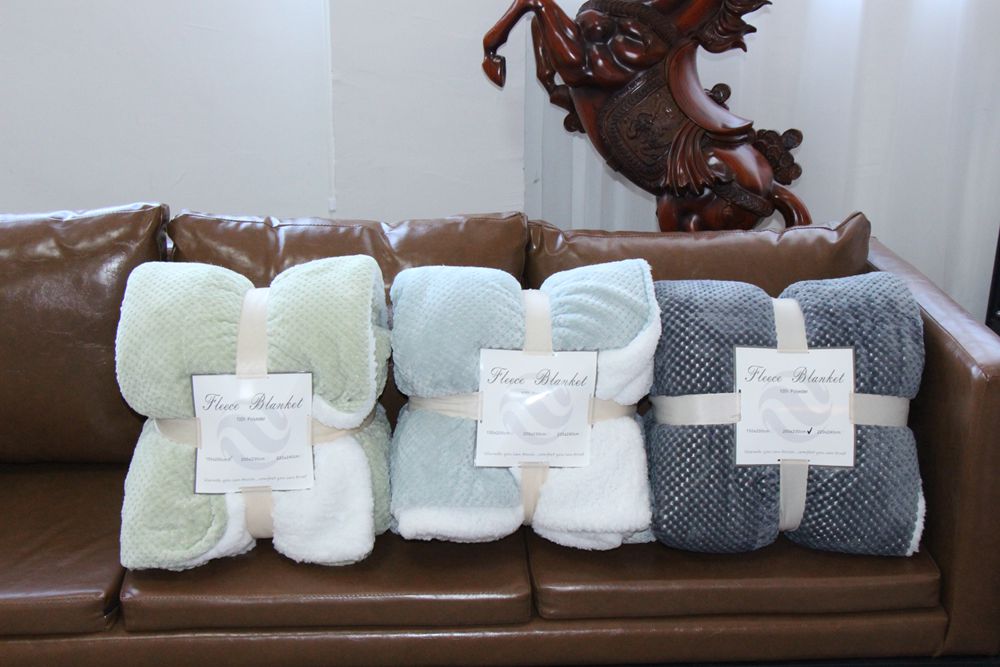
Approve a flannel order label by linking the confirmed offered item and physical format to one order line, authorised identity text and an exact supplier proof. Keep the label request separate from a printing or packing commitment. A photographed display label is not an approved label for a new order. The buyer’s record should identify which proposal was reviewed and retain unsupported statements or mapping gaps instead of treating a catalogue image as an order specification.
Resolve the offer reference without rewriting the listing
Zming Textile’s historical official listing uses a flannel-fabric name but shows finished-looking articles and a bed presentation. That ambiguity remains relevant to a label request. A label for an undefined physical offer can describe the wrong object even when its artwork is clear. Ask the supplier which exact item and format its proposed label covers; do not choose a format from the catalogue wording or photograph alone.
The selected reused detail image shows a different catalogue appearance with display information. It does not authorise a design substitution or confirm any photographed label for the buyer’s order. Use it only as the related product reference it is. The buyer’s identity text must come from the actual enquiry and approved sources, not from copying a visible label and assuming its wording applies.
Separate label identity from the earlier buying decisions
An earlier sale-unit record can identify the object and quantity basis discussed with the supplier. A design-change record can identify a proposed substitution decision. Neither automatically approves an order label. Link to those records if they actually apply, then ask which item and line the new proof represents. Do not carry an old approval status into a different proof merely because the catalogue family is unchanged.
This task concerns order identity and proof control. It does not create a composition declaration, care instruction, certification statement or standard pack quantity. If a proposed label contains one of those claims, identify its source and decision separately. A visually polished label does not verify what it says, and an incomplete buying record should not be filled by borrowing unsupported text from the catalogue.
Use an order-line-to-proof record
Record field | Buyer reference to identify | Supplier response or open decision
Offered item and format | Exact confirmed article or unresolved question | Which object the proposal describes
Order line | Quotation or buyer line reference | Mapping actually confirmed by the supplier
Identity text | Authorised source for proposed wording | Unconfirmed statement or mismatch
Optional label supply | Specific label request | Offered, not offered or unanswered
Proof reference | Received file and stated revision | Exact proposal actually reviewed
Decision | Content and mapping reviewed | Approval, withheld approval or pending clarification
The record does not provide a barcode, composition, dimension or quantity. Those values cannot be invented from the display. It also does not assume that printing, label attachment or a particular packing service is offered. Ask what the supplier’s actual proposal includes and keep digital artwork separate from any physical supplied label. An unanswered optional-service question remains open.
Check the object described by the proof
Read the proposed identity fields against the actual offer reference, not only against the photograph. A proof may identify a design correctly while leaving the physical format unclear. A supplier may also use a local item name that differs from the buyer’s. Preserve both identities and ask how they relate instead of rewriting one field to make the proof appear consistent.
For example, the order record may still contain an unresolved fabric-versus-finished-item question while the proof uses a definite product description. Mark the mismatch and ask which offer the proof actually covers. Do not let the artwork resolve the unanswered commercial question by implication. The buyer can review the visual layout while withholding approval of the disputed identity wording.
Keep factual claims and brand authority visible
If the proof includes material, certification or brand wording, identify the actual authority for that text. Do not adopt fibre claims, performance phrases or photographed brand marks as verified facts. A file can be a proposal without having an accepted basis for every sentence. This workflow supplies no trademark or certification approval and does not promise that the supplier can secure permissions or evidence on the buyer’s behalf.
The same discipline applies to numbers. An order identifier and a pack quantity describe different things. Do not copy an unconfirmed quantity from a display label into a receiving record or treat a code as a count. Keep each supplied field’s role explicit. Where a value is absent or its meaning unclear, retain the question rather than creating a complete-looking label specification.
Control replacements without losing the decision trail
Preserve the original received file name and any stated revision alongside the buyer’s tracking identifier. When a new proof arrives, identify which text or mapping changed and which earlier reference it replaces. Ask whether the supplier’s response still covers the same offered item and order line. A new visual should not silently inherit an approval for another format, design or quoted configuration.
Before recording a final decision, identify the exact proof and the scope of the approval. Keep any withheld claims and unresolved mapping questions beside it. The result can support a clear order handover without establishing a printing service, a supplied label, a material test or a packaging arrangement. It is a decision about an identified proposal, not a general confirmation of every detail displayed in the catalogue.
Frequently asked questions
Can a photographed display label be used as the approved order label?
No. It is part of a catalogue reference, not the buyer’s scoped proof decision. Ask for the proposal tied to the actual offered item and order line. Do not copy its claims or quantities as confirmed order information.
Does approving artwork confirm printing or packing is included?
No. Digital proposal, artwork decision and physical supply have different statuses. Ask what the actual offer includes and retain the response. No printing, attachment or packing service is assumed.
What if the proof names a format the buyer has not confirmed?
Record the mismatch and keep that identity wording unresolved. A proof should not settle an open fabric-versus-finished-item question by implication. Ask which actual offer the supplier’s proposal describes.
Does the proof establish fibre content or certification?
No. Proposed text can repeat an unsupported claim. Keep its source and review status separate from visual layout approval. This record invents no composition, barcode, certification, quantity or brand authority.
Send a line-specific label enquiry
Use the exact flannel listing with the current offer reference and the proposed identity text. Ask whether a label is offered and which proof applies. Keep blog context separate from the actual evidence and limited decision recorded for that proposal.
https://zmingtextile.com/product/stylish-double-layer-flannel-fabric-extra-thick-home-textile-material-with-diverse-patterns/
https://zmingtextile.com/contact/
https://zmingtextile.com/blog/